Official Release of the White Paper on the Digital and Intelligent Transformation of Cross-border Logistics: Industry and Academia Convene on the New Paradigm of AI-Driven Organizational Capabilities
Joint research



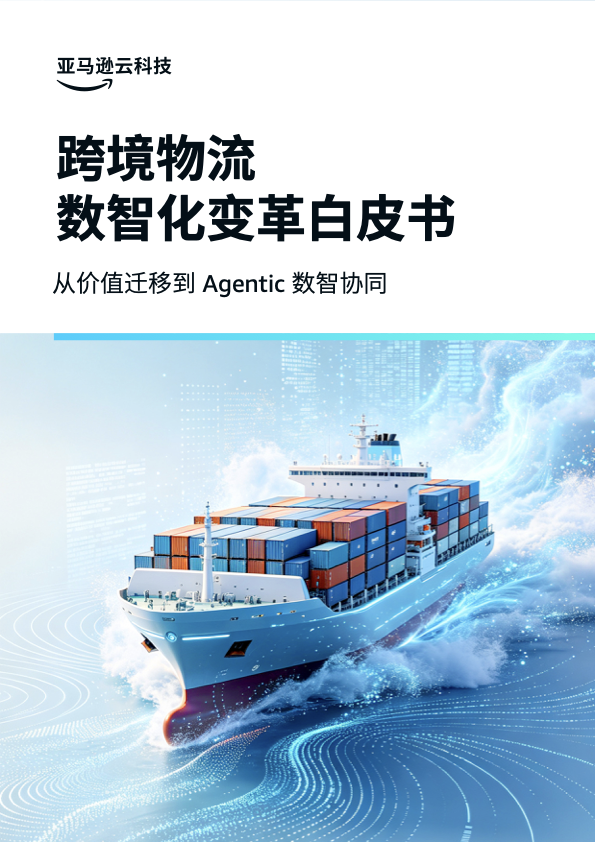
On October 14th, the White Paper on the Digital and Intelligent Transformation of Cross-border Logistics, jointly researched by the HKU Institute of Supply Chain Innovation (ISCI), Amazon Web Services (AWS), and StraightShip, was officially released at the 2026 Amazon Web Services Retail and E-commerce Symposium in Shenzhen. Gathering distinguished guests from industry, academia, and tech sectors, the launch event fostered in-depth discussions on “Agentic AI-Driven Cross-border Logistics Transformation,” witnessing a complete closed loop from theoretical frameworks to industrial implementation.
From the Cost Iceberg to Organizational Capability

Acting as the academic lead of this joint research, Professor Zhixi Wan, Deputy Director of ISCI, introduced the white paper’s core insights, namely, Chinese enterprises expanding overseas are shifting from simple cross-border exports to a “Glocal” regional operation model that demands “local responsiveness plus cross-regional collaboration.” During this transition, cross-border logistics transcends mere transportation to become a profound challenge of coordination. Beneath the surface of low-margin physical fulfillment costs lies a massive “cost iceberg” composed of extensive coordination, transaction, professional, and governance activities. Traditional digitalization has failed to break this bottleneck. The prevailing paradigm of “fragmented SaaS + expert manual handoffs” causes coordination costs—driven by information silos—to scale linearly or even exponentially with order volume, directly restricting business expansion by the sheer availability of human experts.

Based on this critical industry assessment, the white paper proposes the core proposition of “Reshaping the Cost to Serve.” In particular, the advent of AI presents an unprecedented opportunity to pierce through cognitive and coordination costs. By capitalizing expert experience into corporate assets—enabling the equation of “regular employee + AI = expert capability” for infinite scalability—and transitioning from manual handoffs to autonomous Agentic collaboration, enterprises can fundamentally transform the cost structure of professional services. To achieve this, the white paper introduces the Graph-Node-Chian (GNC) organizational capability framework: Capability Node, Capability Graph, and Target Capability Chain. Furthermore, it proposes a “tripartite division of labor matrix”—where SaaS handles fixed processes, Agents leverage expert knowledge to drive progression, and Humans set intentions and exercise judgment—providing cross-border logistics enterprises with a robust, end-to-end methodology bridging theory and operational reality.
Four Pillars of Agentic AI Applications

At the foundational technology level, AWS provides comprehensive engineering support for the white paper’s theoretical framework. Bo Wang, General Manager of Technology and Industry Value Transformation at AWS China, noted at the launch that AWS has structured its Agentic AI capabilities for cross-border logistics into four solution pillars: global compliance system construction, sales operations process reengineering, logistics fulfillment efficiency enhancement, and customer service experience optimization. At the infrastructure layer, Amazon Bedrock offers unified generative AI model services, sparing enterprises from building foundational models from scratch; Amazon SageMaker powers model training spanning from demand forecasting to visual inspection; AWS IoT Core and Greengrass resolve the complexities of integrating multi-brand heterogeneous devices and scheduling edge tasks; while serverless architectural components like Amazon S3, AWS Lambda, and Amazon API Gateway collectively forge an elastic, pay-as-you-go cloud-native technical foundation. Empowered by this comprehensive cloud and AI infrastructure, logistics enterprises can redirect their focus toward industry-specific solutions rather than foundational technical investments.
Connecting Quoting and Fulfillment with AI Agents

During the event, multiple enterprise representatives validated the white paper’s theoretical framework through diverse practical pathways. Jeff Liu, Vice President of StraightShip, shared explorations of their “Glocal” practices in North America. Citing a real-world scenario of “shipping a container from Vancouver to Toronto,” he demonstrated the complex judgments hidden behind a seemingly simple customer request—where extensive variables such as origin, destination, cargo nature, seasonality, and promotional periods must be systematically confirmed to generate a definitive quote. Leveraging the GNC framework, StraightShip has transformed quoting, fulfillment, and exception handling into a capability chain collaboratively executed by multiple AI Agents. This translates previous “individual expert capabilities” into reusable “organizational capabilities,” enabling complex quotes to be generated within a mere 10 seconds. Its underlying architecture deeply integrates AWS’s AI and cloud services, ensuring a secure, governable operational environment for Agent execution.
From SaaS to Service as Software

From a software empowerment perspective, Shunri Guo, CEO of WallTech, proposed the visionary leap “from SaaS to Service as Software.” He pointed out that traditional SaaS can likely resolve less than 10% of standardization issues, whereas AI is poised to independently manage 80% to 90% of future workloads. “We must precipitate the experiential knowledge stored in our employees’ minds into replicable system skills,” Guo emphasized. WallTech’s newly launched CargoWareX AI contract parsing function—built on Amazon Bedrock, the Claude model, and AWS Textract’s document structuring capabilities—compresses the traditional ocean carrier rate contract processing time from half a day to under 5 minutes, achieving an efficiency surge of over 99%.
Although their practical approaches vary—StraightShip begins from logistics business scenarios, working outside-in to reconstruct the entire service delivery chain with AI; while WallTech starts from the foundational software architecture, working inside-out to inject AI capabilities into systems that empower clients to build their own intelligent agents—all parties reached a profound consensus on the core issue: The true value of AI lies not in merely making existing processes run faster, but in fundamentally mastering the complexity hidden behind simple demands, thereby transforming professional capabilities reliant on individual experience into governable, replicable organizational assets.
Capability Organizers as the New Competitive Edge

The symposium also underscored the fierce urgency for industry transformation. Data indicates that annual cost waste due to inefficient coordination reaches approximately $95 billion globally, while AI application penetration in the supply chain sector has already reached 37%. Facing a volatile geopolitical landscape and a market where customer demands have shifted from merely seeking the lowest price to demanding “affordability coupled with absolute stability,” attendees unanimously agreed on a paradigm shift. The future industry leaders will no longer be the enterprises boasting the most trucks and warehouses, but the agile “capability organizers” who can optimally configure resources, define capabilities, and translate them into consistent commercial value.
The release of this white paper signifies that the cross-border logistics industry is decisively transitioning from a resource-connection-centric network to a new era of an Agentic Capability Network, anchored in local fulfillment, professional governance, and digital-intelligent collaboration. Moving forward, the Institute of Supply Chain Innovation at HKU will continue to collaborate with AWS, StraightShip, and broader industry partners. By focusing on cross-border logistics and supply chain industry research, joint innovation in enterprise AI scenarios, multi-case validation, and long-term industry observation, they are committed to driving the deep integration of cutting-edge research frameworks and industrial practices, providing sustained academic support and methodological guidance for the industry’s digital and intelligent evolution.
◆
PRESS & COVERAGEMedia resources2 reports
01
Cross-border E-commerce Headlines · Chinese original
StraightShip at the 2026 AWS Retail and E-commerce Industry Summit
02
Haiyun Network · Chinese original
WIFFA member StraightShip earns major recognition and joins AWS and HKU to release a cross-border logistics white paper